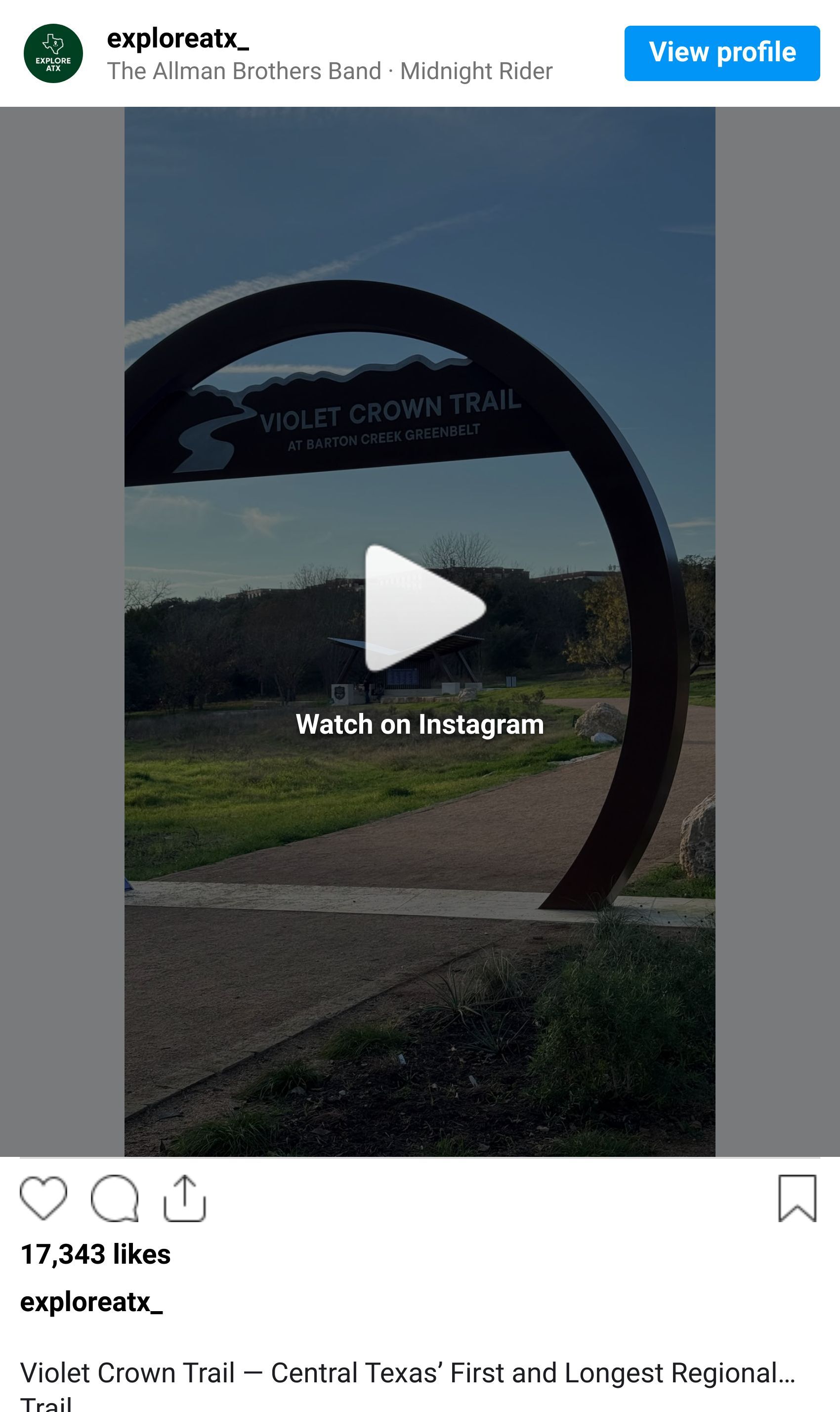
Designed for hiking, biking, and outdoor recreation, the Violet Crown Trail aims to link urban Austin with Hill Country landscapes—offering a long, uninterrupted route that blends city access with protected green space.
Mile Zero: Zilker Trailhead Opens
The most visible milestone so far is the opening of Mile Zero, the Zilker Trailhead, located just behind Barton Springs Pool in Zilker Park. This new trailhead marks the official starting point of the Violet Crown Trail and anchors it in one of Austin’s most iconic outdoor destinations.
From Zilker, the completed Phase 1 section stretches approximately 13 miles south to the Lady Bird Johnson Wildflower Center. This segment alone connects neighborhoods, preserves, and natural areas that were previously difficult to reach without driving.
Phase 1: Cost, Scope, and Impact
Phase 1 of the Violet Crown Trail came with a price tag of roughly $12 million, a figure that has sparked both praise and criticism. Supporters argue the investment creates long-term public value by expanding access to nature, improving mobility options, and preserving open space in a fast-growing region.
Critics, however, have raised concerns about whether the cost was justified, particularly given Austin’s broader infrastructure needs. Questions have also surfaced around design choices, materials, and long-term maintenance expenses that will fall on public agencies.

Phase 2: Extending Into Hays County
Looking ahead, Phase 2 will extend the trail another 13 miles, running from Circle C Park south into Hays County. This final segment is currently projected to open in Spring 2026, completing the full 30-mile vision.
Once finished, the Violet Crown Trail will offer one of the longest continuous trail experiences in Central Texas—connecting city parks, preserves, and regional landscapes without requiring users to navigate roadways.
Environmental Concerns and Ongoing Debate
Alongside cost concerns, some environmental advocates have questioned elements of the trail’s landscaping, particularly the use of non-native plant species at certain trailheads. Critics argue that introducing non-native plants can disrupt local ecosystems, increase water usage, and undermine Central Texas’ emphasis on native landscaping.
Project partners maintain that planting decisions were made to stabilize soil, ensure durability, and balance aesthetics with function. Still, the debate highlights a broader tension in Austin: how to expand public infrastructure while staying true to the region’s environmental values.
A Trail Still Taking Shape
Despite the controversy, the Violet Crown Trail represents a major shift in how Central Texas approaches outdoor connectivity. It’s not just a hike or bike path—it’s a long-term regional project that reflects Austin’s growth, priorities, and ongoing challenges.
As more sections open and public feedback continues, the Violet Crown Trail will likely remain a focal point for conversations about access, cost, conservation, and the future of outdoor spaces in Central Texas.
What do you think about the Violet Crown Trail so far?
Is it a smart investment—or an expensive experiment? Let us know in the comments.