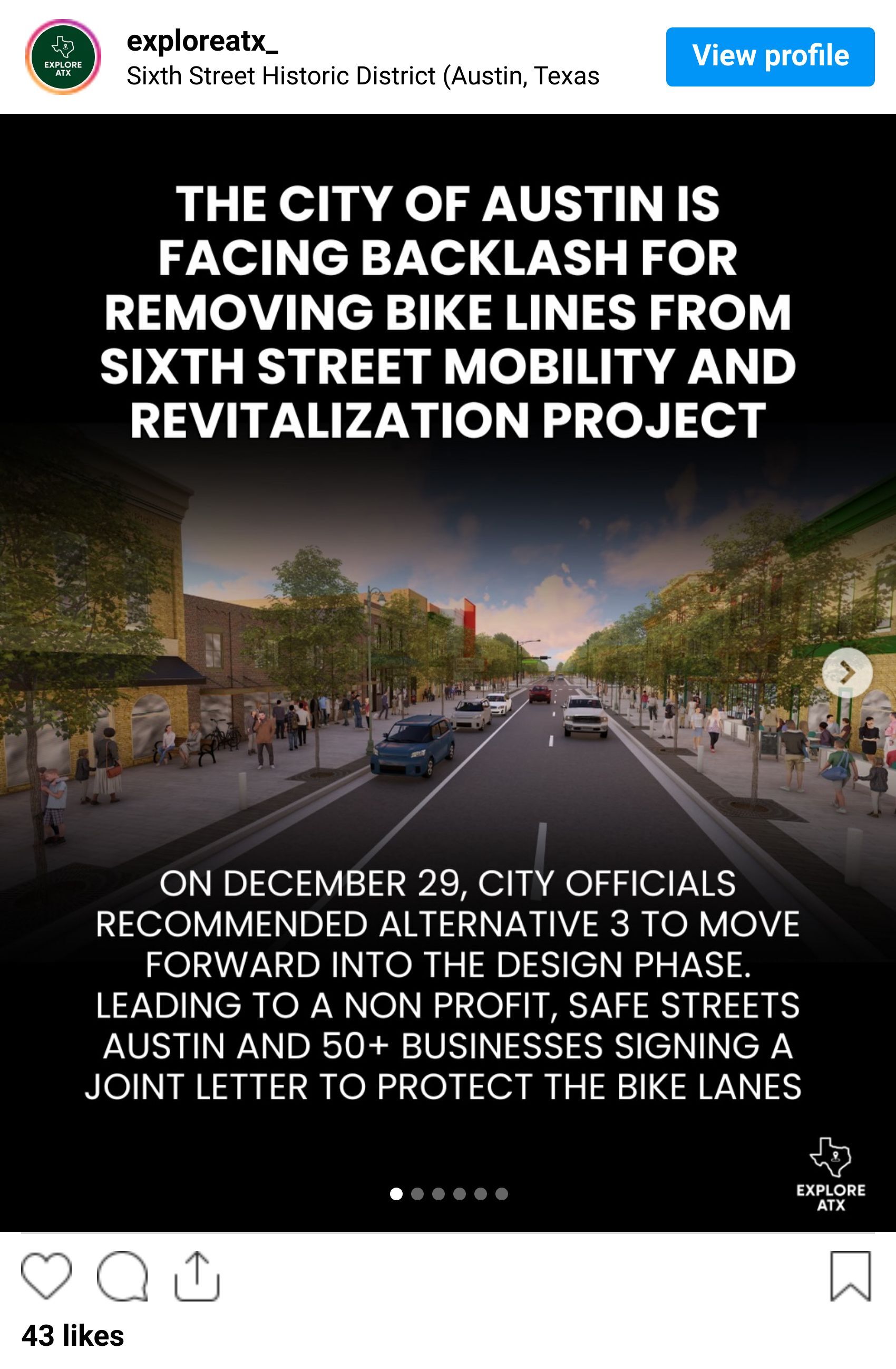

The future of Sixth Street is back in the spotlight after the City of Austin recommended Alternative 3 for the Sixth Street Mobility and Revitalization Project on December 29. The decision moves the project into the design phase—but it has also triggered significant backlash from local businesses and street-safety advocates who argue the plan removes critical bike infrastructure from one of Austin’s most active corridors.
The project will shape the long-term vision for Sixth Street between Congress Avenue and I-35, a stretch that serves as a major nightlife destination, cultural hub, and pedestrian-heavy zone.
What the Sixth Street Project Is Aiming to Do
The Sixth Street Mobility and Revitalization Project is intended to modernize the corridor by improving pedestrian safety, upgrading sidewalks, managing traffic flow, and supporting business activity. City planners have emphasized flexibility—designing streets that can accommodate vehicles, deliveries, outdoor dining, events, and large crowds.
All three proposed alternatives include wider sidewalks, new trees, bollards for pedestrian protection, and two westbound vehicle lanes. The biggest difference between the options lies in how—or whether—bike and scooter lanes are included.
A Breakdown of the Three Alternatives

Alternative 1
Alternative 1 proposed the most robust multimodal design. It included bike and scooter lanes on both sides of the street, curb insets for valet and deliveries, and varied sidewalk widths designed to support cafes, queues, and street furniture. Supporters say this option balanced cars, bikes, and pedestrians while preparing Sixth Street for future growth.

Alternative 2
Alternative 2 scaled that back slightly, retaining a westbound bike and scooter lane on the north side of the street while introducing a curb access lane on the south side for valet and loading. While not as bike-friendly as Alternative 1, it still preserved dedicated space for micromobility.

Alternative 3
Alternative 3, the city’s recommended option, removes bike and scooter lanes entirely. Instead, it prioritizes wider sidewalks—25 feet on both sides—along with a curb access lane on the north side for valet, drop-off, and deliveries. City officials argue this design best supports Sixth Street’s role as a pedestrian-focused entertainment district.
Why Local Businesses and Advocates Are Pushing Back
Following the city’s recommendation, Safe Streets Austin and more than 50 local businesses signed a joint letter opposing Alternative 3. Their concern is that removing bike lanes undermines years of progress toward safer, more accessible transportation options downtown.
Critics argue that Sixth Street already experiences heavy congestion and safety challenges, particularly during peak nightlife hours. They say eliminating dedicated bike infrastructure could push cyclists into traffic or onto crowded sidewalks, increasing conflict rather than reducing it.
Business owners have also raised concerns about long-term accessibility. With downtown Austin continuing to grow, opponents fear the plan prioritizes short-term vehicle access over a future where walking, biking, and transit play a larger role.
What City Officials Are Saying
City staff have framed Alternative 3 as a flexible, pedestrian-first approach that allows Sixth Street to function as both a street and an event space. Wider sidewalks are intended to better handle crowds, outdoor dining, live music queues, and festivals—features that define Sixth Street’s identity.
Officials have also noted that bike routes exist on parallel streets, suggesting cyclists can still navigate the area without dedicated lanes on Sixth itself.
What Happens Next
The preliminary engineering study for the Sixth Street Mobility and Revitalization Project is expected to be completed by early 2026. The City plans to begin detailed design work later that year, with construction potentially starting as early as 2027.
Public feedback remains open, and advocates are urging residents, cyclists, and business owners to weigh in before the design is finalized.
Why This Decision Matters
This debate goes beyond bike lanes. It reflects a broader question Austin continues to face: how to balance nightlife, economic activity, safety, and long-term transportation goals in a rapidly growing city.
What happens on Sixth Street could set a precedent for how other high-traffic entertainment districts are redesigned in the future.