

The Austin Central Library is more than just a library — it’s an internationally recognized civic landmark. Located at 710 W. César Chávez Street in downtown Austin’s Seaholm District, the six-story, 200,000-square-foot building opened in 2017 and has since become one of the most celebrated public libraries in the world.
Its impact extends far beyond Austin. TIME Magazine named the Austin Central Library one of the Greatest Places in the World, putting it on a global list typically reserved for iconic museums, cultural institutions, and architectural achievements. For Austin, it was a defining moment — confirmation that the city’s investment in public space paid off on a world stage.
Architecture & Design: Built for Light, People, and the Texas Climate
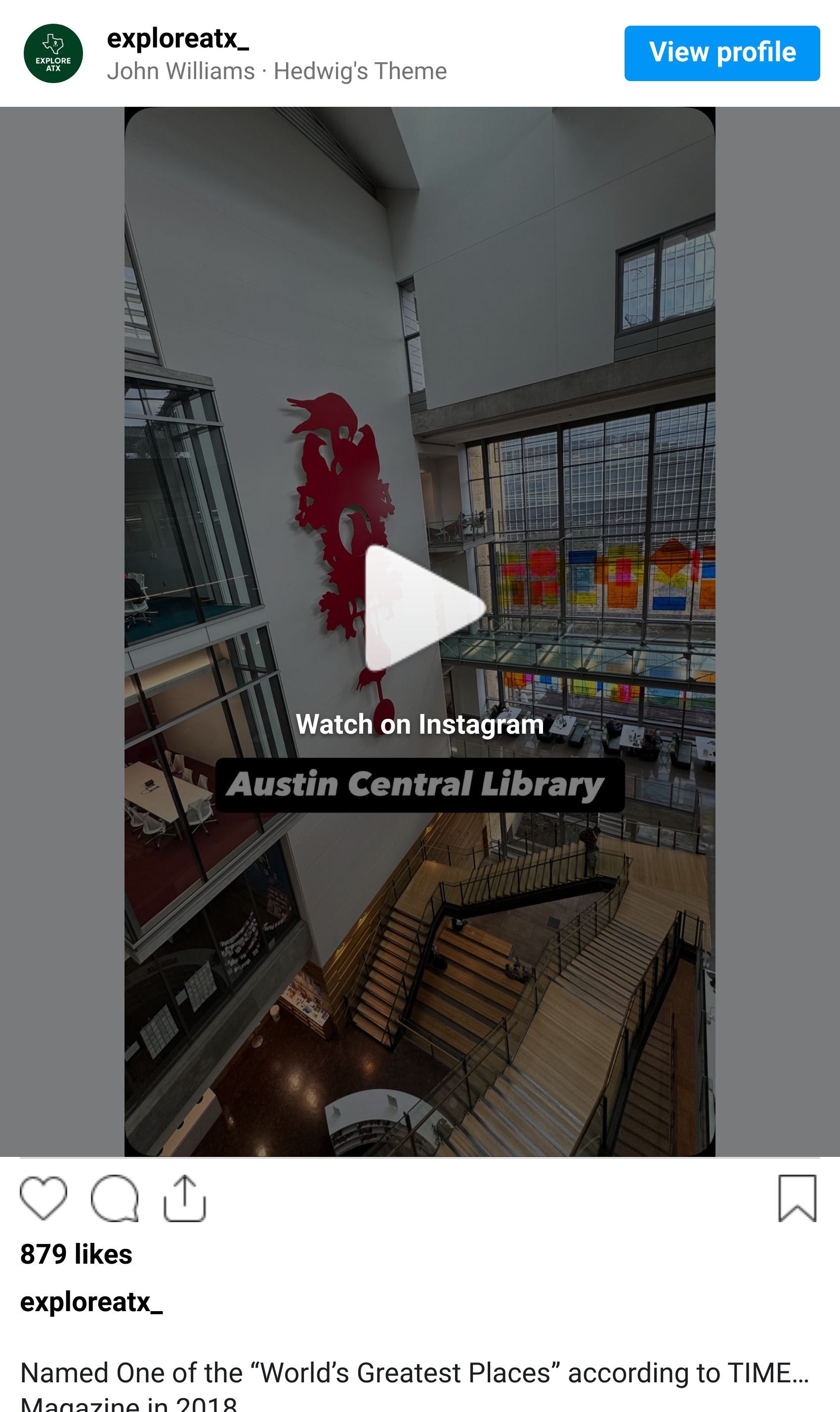
Designed by Lake | Flato Architects in partnership with Shepley Bulfinch, the Austin Central Library was conceived as an open, welcoming structure that feels more like a community living room than a traditional library.
At the heart of the building is a dramatic six-story atrium, which allows natural light to reach more than 80% of occupied spaces. This daylight-driven design reduces energy use while creating a warm, uplifting environment for reading, studying, collaboration, and events.
The stepped terraces, shaded porches, and material palette reflect Central Texas geology and respond directly to Austin’s heat — blending indoor and outdoor spaces in a way that feels uniquely local.

One of Austin’s Greenest Public Buildings
The Austin Central Library is one of the most sustainable civic buildings ever built in the city. It earned LEED Platinum certification, the highest environmental rating available, setting a new standard for public infrastructure in Texas.
Key sustainability features include:
A 373,000-gallon rainwater harvesting system used for irrigation and plumbing
A 180-kilowatt rooftop solar array that also provides shade to the roof deck
High-performance glazing and sun-shading to reduce heat gain
Native and adaptive landscaping that minimizes water use
These systems work together to lower long-term operating costs while reinforcing Austin’s commitment to sustainability and climate-conscious design.
The Innovation Lab: A Public Space for Builders and Creators
One of the most forward-thinking elements of the Austin Central Library is its Innovation Lab, which transforms the library into a hands-on learning and creation space.
The lab provides public access to:
3D printers and laser cutters
Digital media and design tools
Fabrication and prototyping resources
Skill-building workshops and educational programming
For students, entrepreneurs, artists, and makers, the Innovation Lab functions as a rare, publicly accessible creative studio — reinforcing Austin’s reputation as a city where ideas are meant to be built, not just discussed.
Collections, Amenities & Community Spaces
The library houses more than 350,000 books and media items, but its role goes far beyond its collection. The building was designed to support a wide range of community needs and experiences.
Notable features include:
A 350-seat event forum for talks, performances, and public programs
Art galleries and rotating exhibitions
A demonstration kitchen for culinary and educational events
A café and bookstore
Dedicated children’s and teen areas
Quiet reading rooms, study zones, and outdoor porches
Two levels of underground parking provide approximately 140 parking spaces, while nearby hike-and-bike trails make the library easily accessible by foot or bicycle.

Rooftop Garden: One of Downtown Austin’s Best Free Views
The rooftop garden has become one of the library’s most iconic features — and one of downtown Austin’s best free public viewpoints.
Landscaped with native plants and shaded seating, the rooftop offers panoramic views of Lady Bird Lake, the Seaholm District, and the downtown skyline. Beyond its visual appeal, the rooftop plays a functional role by reducing heat absorption and supporting the building’s energy efficiency.
It’s a rare combination of sustainability, design, and leisure — a place where visitors can read, work, or simply pause above the city.

Why the Austin Central Library Matters
Being named one of the greatest places in the world by TIME Magazine isn’t just a design accolade — it reflects the broader role the Austin Central Library plays in the city’s cultural fabric.
This building represents a modern vision of public space:
A library, yes — but also
A technology hub
A community gathering space
A sustainability showcase
A world-class piece of architecture
In a rapidly growing downtown, the Austin Central Library proves that cities can invest in spaces that are inclusive, innovative, and globally respected — all while remaining free and accessible to the public.
For locals and visitors alike, it’s not just one of Austin’s best libraries — it’s one of Austin’s most important places.
Address: 710 W. César Chávez St.
Sunday: 12:00 pm-5:00 pm
Monday: 9:00 am-8:00 pm
Tuesday: 9:00 am-8:00 pm
Wednesday: 9:00 am-8:00 pm
Thursday: 9:00 am-8:00 pm
Friday: 9:00 am-5:00 pm
Saturday: 10:00 am-5:00 pm